Honeybush

Background

Centuries ago the Khoi tribe arrived in the Cape, bringing with them their sensitivity to the natural world and their reverence for nature. They discovered the Cape Honeybush (Cyclopia) and Rooibos (Aspalathus Linearis) plants and realised that infusions made from these indigenous herbs were refreshing and flavourful. They became aware of the healing qualities of Honeybush and Rooibos, and this knowledge still forms a large part of their tribal medicinal lore.
 
News of the marvellous health promoting properties of these plants filtered through to the wider South African society, and soon stories were springing up about how they could be used, not only as a beverage, but as a cure-all for all sorts of ailments. Modern science has since lent credibility to the rich but anecdotal tales of healing that have been passed on from generation to generation. Honeybush and Rooibos teas are steadily gaining popularity on the international market, particularly in countries such as Japan, Germany and Switzerland, as more and more discerning and health conscious buyers realise that they provide a delicious and healthy alternative to the more conventional beverages.
 
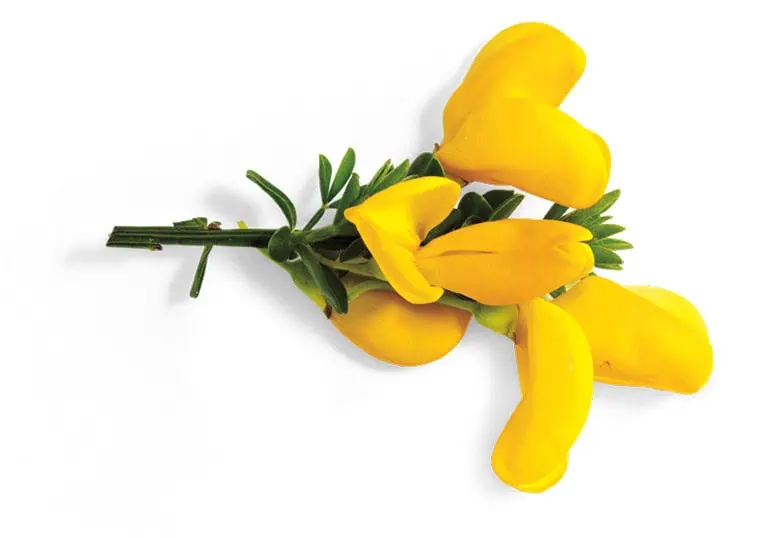
Honeybush (scientific name Cyclopia spp.; Family: Fabaceae), or 'Heuningbos' in Afrikaans, is commonly used to make an infusion in the same manner as tea. It grows only in a small area in the southwest of South Africa in the Langkloof area of the Eastern Cape and shares many similarities with Rooibos. Honeybush is so named because the flowers smell of honey. The taste of honeybush tea is similar to that of Rooibos but a little sweeter.
 
There are 23 species of honeybush tea found in the wild, of which mainly 4 are used for commercial use. These are -
  • Cyclopia intermedia, known as 'berg tee' or mountain tea
  • C. subternata, known as 'vlei tee' or marshland tea
  • C. genistoides, known as 'kus tee' or coastal tea
  • C. sessiliflora, known as 'Heidelberg tee', named after a town in South Africa, where it grows in the local mountain range.